The Beautiful Game
The Beautiful Game
BY Patrick Gibney
Unless you’ve been living under a rock, you probably noticed soccer fever spreading across the country recently. Soccer, known as “football” everywhere else, is a truly global sport and the FIFA World Cup, an event that occurs every four years, is its ultimate test of global supremacy. Over a three-year period, approximately 206 countries compete for spots in the final 48 team tournament. This year, the US, Canada, and Mexico hosted it. The 2026 tournament served as a massive cultural catalyst in the United States, driving a shift in how Americans engage with both sport and people from other countries. In fact, in a world where there are so many forces trying to tear people apart, watching fans from around the world embrace America, and Americans embrace different cultures, was inspiring.
The USA had a pretty decent run, making it to the last sixteen. Not a bad achievement for a team that still has a ways to go before having a realistic shot at winning the tournament. Multicultural exchanges notwithstanding, the growth of the game domestically should be significant in the years ahead. That being said, not all Americans are able to wrap their heads around some of the rules and practices of the modern game – players throwing themselves to the ground and feigning injury, yellow cards, red cards, offside, and “extra” time that is at the referee’s discretion on the field are all frustrating and seem contradictory to the average American. Conversely, calling yourself world champions when no one else plays your sport is equally ridiculous to the average non-American. So, touché.
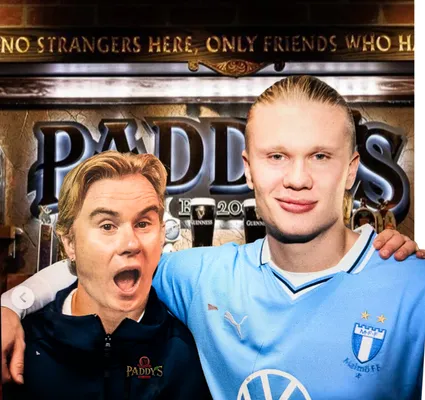
The World Cup, for me, sheds light on the balance between our shared human nature and our unique individual or group characteristics. Take the Norwegians, for example. Watching them all row in unison to the beat of a drum by their star player, Erling Haaland, was a joy to witness. And Haaland himself was a big hit. His authentic and goofy personality, and his magnanimity in defeat, captured the hearts of Americans, not to mention the seven goals he scored in five games. He gained over twenty million Instagram followers in a thirty-day stretch, causing the algorithms in the US to actively prioritize his content to meet audience demand.
And Haaland, like so many people who visited the US for the World Cup, was not only blown away by the cities, stadiums, and training grounds, but also by the people. Before spending nearly ten grand in a Dallas, Texas, western wear store on cowboy hats, boots, belt buckles, and other must-haves, the affable Norwegian became emotional when asked about the Americans he had met. He said that they were kind, funny and welcoming, and he was really moved by how much they love their country. Well done, America. Many believe we just witnessed the best World Cup tournament ever.
